This is about more than just going outside.
We aim to open up horticulture to young people who wouldn’t have been able to make it a career in the past – and show them how it can have an impact.
Young people are facing a mental health emergency.
One in five young people aged 8-25 have a probable mental health condition.
This emergency isn’t caused by one thing – it’s a million tiny things that all add up.
From a cost-of-living crisis, never-ending waiting lists, climate anxiety, to a school system that doesn’t understand them. Young people are feeling crushed.
Young people are already doing so much to find glimmers of hope and power in dark times, but it shouldn’t just be on them to find a way through.
The good news is, in community there’s power. Together, we can ease the pressures on young people and make the world less heavy.
And that's what this garden is all about – shining a light on this struggle and coming together to find solutions to the problems facing young people today.
Thanks to Project Give Back, an initiative that gives charities a unique opportunity to raise awareness and support their work at the world’s most famous horticultural event – the Chelsea Flower show, and with support from Bupa Foundation, we've been able to bring this concept to life.
We’ve teamed up with the designers at Chase Gardens to create a space that represents the many challenges that young people face and their resilience finding a way through – and showcase it at Chelsea Flower Show.
This garden is made possible thanks to Project Giving Back (PGB), the sole sponsor of the garden.
Project Giving Back is a grant-making charity that funds gardens for good causes at the RHS Chelsea Flower Show. Launched in 2021 in response to the impact of the Covid-19 pandemic on charitable fundraising, PGB supports UK charities to raise awareness of their work through the Chelsea Flower Show and beyond.
In 2026, PGB will fund 11 gardens at the RHS Chelsea Flower Show, and between 2022 and 2026 will have supported 63 gardens inspired by a range of good causes. PGB also supports the relocation of gardens after the show, helping them continue to benefit charities and their communities long term.

The garden has been supported by the Bupa Foundation. Since 2015, the Bupa Foundation has donated more than £12m to help create healthier communities.
The Bupa Foundation helps build healthier communities – funding projects that which support people and planet health. They know how vital nature is for young people’s mental health. Even small moments in urban green spaces can ease stress, lift mood, and spark creativity. That’s why we’re creating a place together where young people can connect with nature and each other to thrive.


We aim to open up horticulture to young people who wouldn’t have been able to make it a career in the past – and show them how it can have an impact.
Chase Gardens bring their own experiences to the space – and we’ve worked closely with the team to ensure it’s an authentic expression of the realities that young people are facing today.
Chelsea flower show typically relies on volunteers to bring their gardens to life – but all young people involved in our garden will be paid for their time and work.
Though the garden will begin its life at Chelsea it will be relocated to Newham after the show where it will become a living, breathing, inclusive, outdoor community space – fully accessible to buggies, wheelchair users and people with physical mobility needs.
Working with the Community Land Trust and PEACH, Chase Gardens plan to use the space to host gardening sessions for young people. These will include incorporating growing plants for both their beauty and practical uses as an ingredient, garden design basics and rare plant identification.
But by creating spaces for young people to thrive, we can come together to tackle the issues they are facing. No young person should have to face this alone.
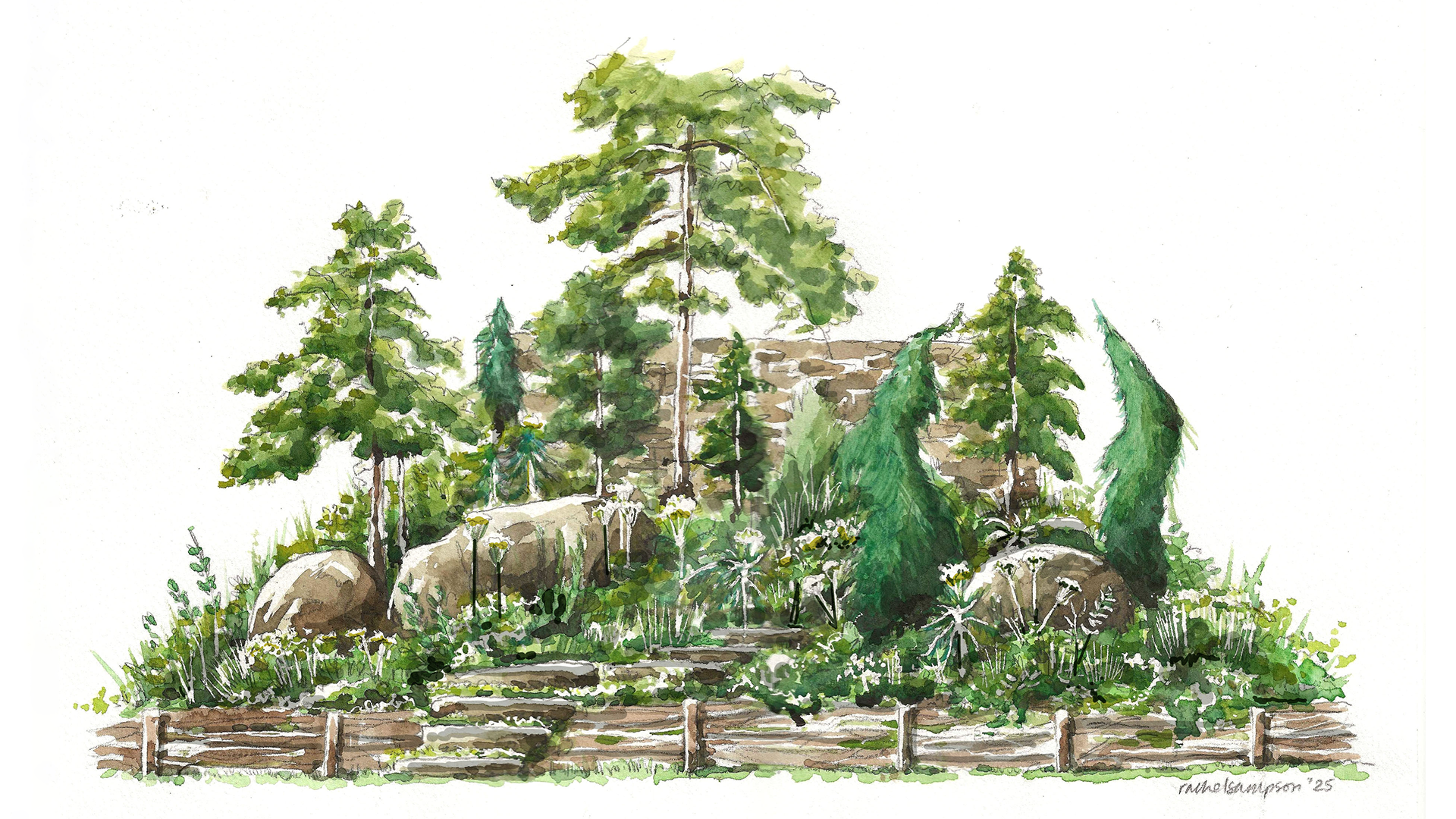
The garden brings together plant species from across the world, specifically designed to inspire young people growing up in the city.
It offers an opportunity for young people to come together in connection with nature and each other in a shared moment of collective self-care.
The diversity of the garden reflects the range of experiences young people bring to the space. It’s an expression of what makes each person unique, as well as how we can come together with a shared goal.
Yellow flowers, the sole colour in the planting, echo the accents of YoungMinds’ brand and the light and hope it represents. The flowers burst forth from cracked, four-tonne boulders that symbolise the weight of the complex realities young people face today – and their strength growing around these struggles.
Towering conifers create a sense of safety and enclosure, while their unique growth patterns mirror the nonlinear nature of recovery. A path of stepping pads allows young gardeners to walk through the space and take a moment to pause and interact with the habitat.
The space will be framed by a breeze block wall, mirroring the urban environment the garden will eventually settle in, and drawing your focus inwards. Each block in the wall will be filled with cob, a sustainable building material, which will provide a nesting material for bees. Over time, the wall itself will become its own buzzing community of insects and wildlife, ensuring the visitor/ gardener is never truly alone.
The garden offers young people a moment to heal surrounded by nature in an otherwise urban setting – and invites visitors to consider how we can nurture environments where young people can thrive.
Young people have been involved in the garden’s conception, its journey, and will continue to shape its legacy.
Together, YoungMinds and Chase have created an “Introduction to Gardening” course for 16–25-year-olds, designed to show young people what is possible within a horticultural career – from weeding in South London to contributing to the biggest gardening event in the world.
After the show, we plan to work closely with youth groups to sustain the garden’s impact and continue its mission of inspiring and activating the next generation of young gardeners.