A young Black woman in a wheelchair and an older Black woman sitting on a bench in the park. They are laughing together.

Celebrating Black young women's stories

Passing the mic to Black young women

Black young women often face unique challenges when it comes to mental health.

Misogynoir – the layered discrimination of racism and sexism – can make accessing support harder, leaving many feeling overlooked, misunderstood or unheard. 

Black young women told us they want digital content that:

  • Shares and celebrates a variety of different stories, including the ups and the downs
  • Makes space to be fully themselves
  • Validates softness and shows what that can look like

Everything on this page celebrates Black young women's voices and aims to offer mental health support that helps you feel seen, heard and represented.

Through personal stories and creative content, young people explore themes like belonging, identity, mental health, relationships and self-acceptance.


A Black young woman with tied-up afro-textured hair looks at the camera with a neutral facial expression.

Jola: Heavy is the head that wears the crown

A narrative on “First-Daughterhood" by Jola Ajiboye

[First / Title page]: Heavy is the head that wears the crown

Image description: A Black young woman with afro-kinky textured hair wears Yoruba bridal attire. She is dressed in a bright blue dress and matching fila that covers her eyes, with orange earrings and layered bead necklaces.


[Second and third page]: The profile

The standards women have been held up to have been limited to marriage and offspring historically, with successful women being distinguished by their pure, docile, nurturing and most importantly, desirable qualities. 

But under capitalism, the playing field between men and women hasn't been levelled. Instead, women are expected to perfectly embody the same qualities, but also those traditionally associated with men.

Image description: A Black young woman with afro-kinky textured hair wears Yoruba bridal attire holds a clothing hanger in each hand with a pink skirt and blue trousers. She is dressed in a bright blue dress and matching fila that covers her eyes, with orange earrings and layered bead necklaces.


[Fourth and fifth page]: The notice period

Girls are widely believed to mature faster. In actuality, our "maturity" is a result of being adultified from a young age, and this manifests in an African eldest daughter's life very early, especially if they have younger siblings.

For the eldest daughter, childhood is cut short by responsibilities we barely understand. We spend out lives chasing a moving goalpost, foolishly believing that this time, we'll finally get it right.


Image description: Viewed from above, a Black young girl with afro-textured hair wears a pink hairband and a pink top. A Black person’s hands style her hair while another Black person passes her a bright blue fila.


[Sixth and seventh page]: The job description

But you can't win a game rigged against you from the start.

We don't grow into ourselves, but into an idealistic, pre-made image.

For the typical conservative African household, this means the ideal first daughter is a very clear, strict pictures.

And it is NOT up to interpretation,

Image description: Viewed from behind, a Black young woman with afro-kinky textured hair wears a blue fila and faces a blackboard. The blackboard has a brown wooden frame and legs, with the following written in white:

 1. Get married

 2. Be rich (but not richer than your husband!)

 3. Send money back home

 4. Have kids, take care of the home, contribute always in every way possible

Never say you're tired!


[Eighth and ninth page]: The role

The picture is this: the pretty visual of effortless "feminine" idleness that acts as a mask to the gritty unshakable "masculine" interior. To perfectly "act like a woman and think like a man". A woman that can bear it all but make her husband believe that he got the job done.

A woman that is independent enough that they don't need to be taken care of, but dependent enough that they can NEVER make their own decisions.


Image description: A Black young woman with afro-kinky textured hair wears Yoruba bridal attire, including a bright blue dress and matching fila. The fila covers her eyes, with an orange helmet worn over it. She also wears orange earrings and layered bead necklaces.

She layers grey cement on top of grey bricks using a Brick trowel, her hands covered by grey gloves.


[Tenth and Eleventh page]: The workload

There are already tough expectations on black women from the rest of the world: to be strong, to be invincible, to endure.

And with perceived masculinity, there is pressure to perform womanhood.

And performing softness while projecting strength is tiring.
But have to perform different versions for different audiences at the same time? That’s exhausting.


Image description: A Black young woman with afro-kinky textured hair wears Yoruba bridal attire, including a bright blue dress and matching fila. She holds a large orange bowl. It contains items including dollar notes, a silver pot, books and a straw broom. 


[Twelfth and Thirteenth page]: Heavy is the horsetail, heavy is the gown, heavy is the dainty head, that holds up the noble crown


Image description: A Black young woman with afro-kinky textured hair is seated, wearing Yoruba bridal attire, including a bright blue dress and matching fila. One hand rests on her upper leg; the other holds a large grey horsetail feather.


[Fourteenth and Fifthteenth page]: The retirement

There is nothing wrong with having androgynous qualities, or solely “feminine” or “masculine” ones. The issue is the lack of autonomy: room for free expression, room for individuality. Room for self.

Room to step away from overwhelming, entitles dynamics. Room to move through the world as you want. Room to rest.

Image description: A Black young woman with afro-kinky textured hair wears a purple agbada and gele with blue detailing. She wears purple earrings and layered orange bead necklaces with purple line detailing. She has a neutral expression and piercings in her right nostril and left eyebrow. She wears subtle grey eyeshadow and pink lip gloss with brown lip liner.

[Sixteenth and Seventeenth page]: Put in your notice; put yourself first. Resign from this unsustainable duality. End the contract of the delicate yet dauntless African Eldest Daughter. Because no one else will feel the weight. No one else, except, of course, - Your fellow eldest daughter

If the weight of expectations is feeling too heavy today, you don’t have to carry it alone.


Image description: Bold red text on an orange background appears in a range of font sizes. Handwritten text reads ‘Your fellow eldest daughter’.


[Eighteenth page]: Jola Ajiboye x YoungMinds UK


Image description: Against a red background, black handwritten text reads ‘Jola Ajiboye’. Bold yellow text in capital letters reads ‘x YoungMinds UK’.

I conceptualised this piece after a call from one of my relatives.

  • They were reiterating how important it was that I found a placement, which was genuinely all I was thinking about or talking about at the time. I spend the majority of my time worried about my future, obsessively refreshing emails, stretching myself thin. I found the call so ironic because we have so many conversations about how there is “no pressure on me”, because I had made everyone pretty uncomfortable a couple of times expressing my borderline obsession with success… and where that came from.

    The narrative around “First-Daughterhood” isn’t new. It’s such a ridiculously universal experience; I occupy this cliche, along with many others, I’m sure everyone’s familiar with “ gifted child, burnt out adult”, for one. But in my case, there’s the added context of my long undiagnosed ADHD (I wasn’t even diagnosed until after I began this project), very academically rigorous background, along with my general proclivity to be “unladylike”.

    Sometimes, it feels like I'm running a race blindfolded with my hands tied behind my back, and as the world shouts at me from the sidelines that I shouldn’t be there at all, my “support system” shouts too, telling me that I should be ahead of everyone else no matter what. It was from that feeling that this piece was born.

What this opportunity means to me

  • YoungMinds is such a great organisation to be working with, especially at this moment in time. I think Gen Z, and young people as a whole -  historically - get so much unnecessary scrutiny for the amount of pressure we endure. Every year, the expectations of young people rise exponentially.

    Mental health support is so important, and this project specifically, where creative work from underrepresented groups is highlighted, is so important to me. Because intersectionality exposes issues lots of people would never consider, especially in communities where certain topics, such as mental health, are still so misunderstood and taboo.

    And with so much of my work exploring Black womanhood, and with my lived experiences, I couldn’t imagine not gunning for the opportunity.

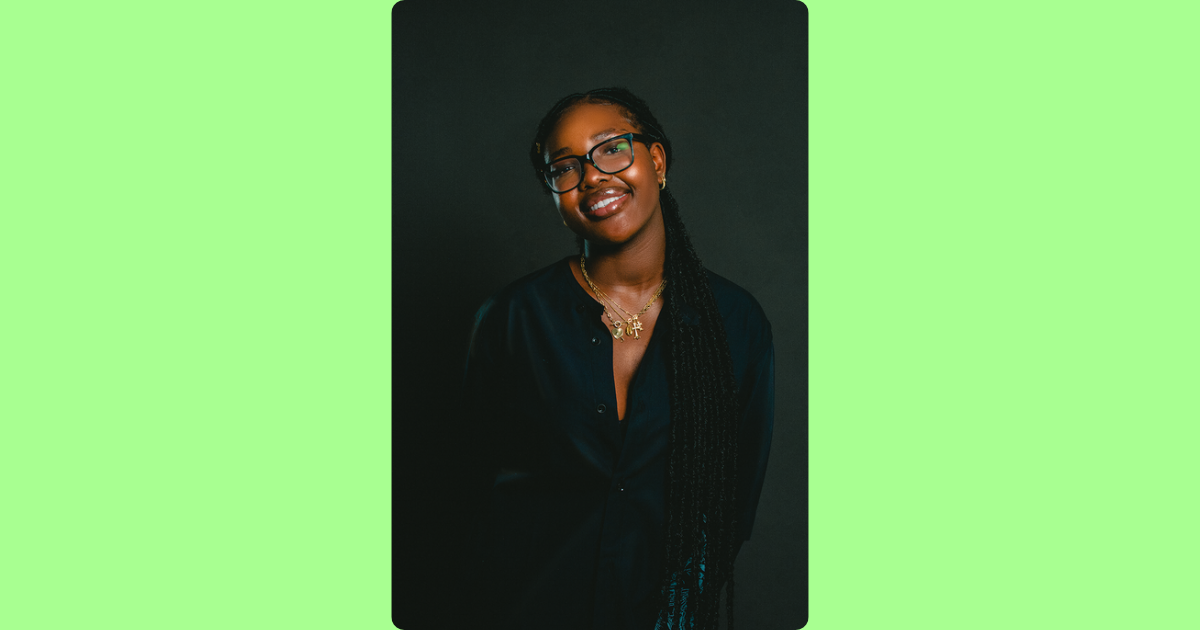
A Black young woman with glasses and long braids wears a black blouse and smiles.

A Black young woman with glasses and long braids wears a black blouse and smiles.

My name is Jola Ajiboye (she/her)

I’m an international student from Nigeria pursuing a creative career in the current job market. For the first time, I’m navigating an environment where I’ve been minoritised beyond my experience of neurodivergence—something I can, at least, mask.

I’m a multidisciplinary creative passionate about making an impact through my work. My practice is Afrocentric, experimental and editorial, exploring identity and sociology through the lenses of Blackness and womanhood. Through conceptual storytelling, I often challenge dominant narratives.

The woman in the bridal dress and the fila is an intentional choice, and so is the agbada and gele at the end. I wanted to play with androgyny because I’ve always found it hilarious how I seem to exhibit feminine and masculine qualities, but apparently never the right ones. I believe that female labour has always existed, even before we were explicitly allowed to work, but it has changed significantly.

For someone like me, I don’t think domesticity, or many aspects of “traditional femininity” comes naturally to me. So I thought that exploring this visually in two ways was important. 

My advice for Black young women

  • Everyone is going to keep telling you what to do. You could do all of it, and it's possible that nothing will change, no one will be satisfied. That is what you need to remember. Know that this is freedom. 

  • Please prioritise your wellbeing, play the long game if you must, whatever that means for you.

  • I love my family, genuinely, and they’re not abusive by any metric; in their own weird little way, their high expectations of me are rooted in love. But if pressure on you, to be successful, to be a wife, to be whatever, becomes unsustainable, you have to put yourself first. You do not owe anybody strength.

  • You shouldn’t have to be anything but kind to yourself.

  • You are a person before you are a daughter; a sister; a niece; a friend. So live for yourself. And try therapy if you can

You need to own your perception of yourself. You need to feel no ounce of guilt over the choices you make. It is your life. You do not exist in relation to other people.

Jola

Jia: Seen before understood

A short film by Jia Patrick on navigating identity and belonging in predominately white spaces

Jia, a Black young woman in a navy-blue top, sits on a brown sofa, reflecting on beauty, self-love and representation through voiceover and direct-to-camera narration. Childhood photos and videos appear alongside close-ups of her eyes and hands and scenes of her examining herself in a mirror. Outdoors, she walks through an alleyway, along a street and over a bridge, and stands by a tree with rustling leaves. The video ends with a childhood clip on a white photobook page.

4-minute watch

The piece reflects on the subtle ways beauty standards, representation, and social expectations can shape how we see ourselves.

It is about moving beyond other people's perceptions and recognising that we do not have to become someone else to deserve acceptance. Ultimately, I wanted to create something that reminds young Black women that their identity is not something they need to dilute, explain or change to deserve belonging.

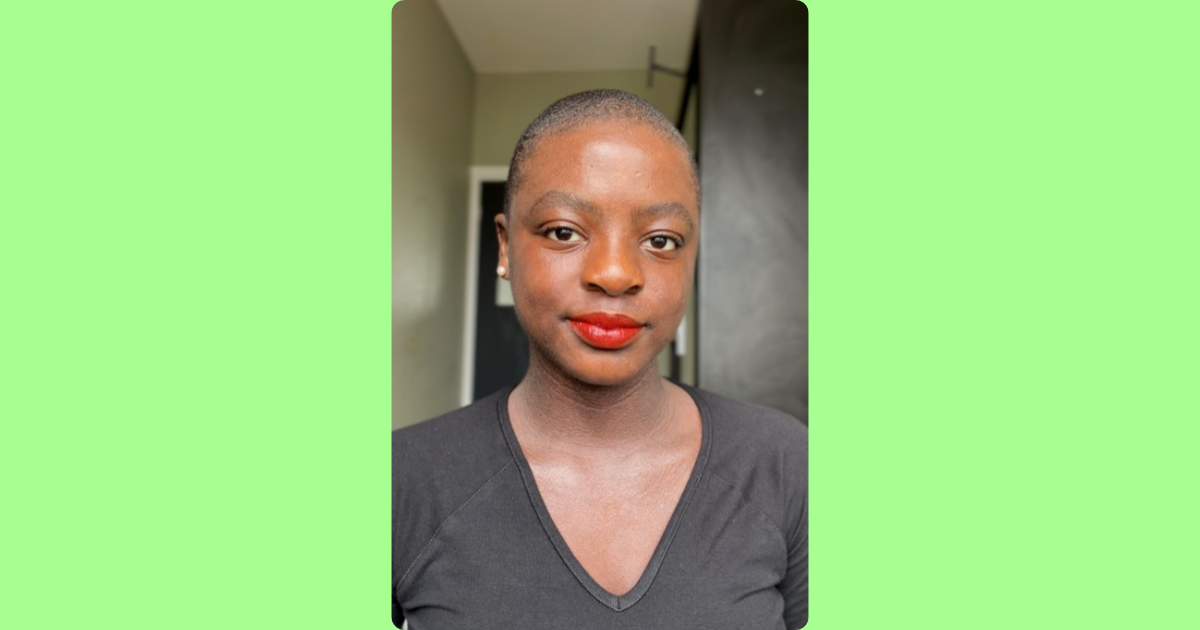
A Black young woman wearing red lipstick smiles.

A Black young woman wearing red lipstick smiles.

My name is Jia Patrick (she/her)

Growing up, I didn't always have the language to understand how my experiences were shaping the way I saw myself. I moved from a predominantly black private Christian school to a predominantly white state school, where I became one of very few Black girls in my year. During those years, I became more conscious of difference, beauty standards, outward perception, and my blackness.

As a young Black woman, I know how meaningful it can be to encounter stories that reflect experiences you have struggled to articulate yourself. I wanted to contribute to a space where black girls and young women could recognise parts of their own experiences without feeling that they had to fit a particular stereotype or be defined by what they have endured.

This opportunity was important to me because it brought together two things I care deeply about: storytelling and creating space for conversations that can help people feel less alone. Working with YoungMinds gave me the opportunity to use my creative voice for something beyond storytelling alone: to offer recognition, encourage reflection and reinforce the importance of mental wellbeing. I hope the work reminds someone that they do not have to make themselves smaller to belong, and that they are allowed to just be themselves. 

What my film represents

  • Through cinematic visuals and intimate capture this film moves from childhood innocence to awareness, adaptation, and eventually a return to softness. At its core, this piece aims to offer permission to exist beyond expectation, performance, and just simply be.

    I wanted to explore the quieter ways black girls can learn to adapt themselves to feel accepted, sometimes before they fully understand who they are or what they need. I approached the film as a visual reflection rather than a straightforward explanation of my experiences. I wanted the audience to feel the gradual shift from childhood innocence to self-consciousness, and then towards a more intentional understanding of self. The childhood photographs represent a time before I fully understood how appearance, identity and other people's perceptions could shape my sense of belonging. Mirrors, small adjustments and repeated gestures represent the ways we can unconsciously alter ourselves to feel more acceptable. As the film progresses, the visuals become more open, reflecting the possibility of releasing those expectations and reclaiming space. 

What I want Black young women to know:

  • You don't always have to be okay

    You don't have to navigate everything alone and you don't have to be okay all the time. 

  • Letting go of other's expectations can help

    Sometimes, when you're trying to find your place in the world, you can become so focused on meeting other people's expectations that you lose sight of your own needs. If that feels familiar, give yourself permission to pause and ask yourself what you think, feel and need, separate from what the world expects of you. 

  • You're allowed to be soft

    You don't have to earn rest by being strong, and you don't have to change who you are to make other people comfortable. There is no single way to be a Black girl or woman, and you are allowed to be soft, uncertain, complicated and still becoming. 

  • You deserve support

    If things feel overwhelming, please reach out to someone you trust or a professional who can support you. You deserve to be heard, supported and taken seriously. Most importantly, you deserve space to be yourself. 

You don't have to earn rest by being strong, and you don't have to change who you are to make other people comfortable.
Jia

Salome: For those who are too hard on themselves

A short film by Salome Tirado exploring the beauty of being present 

Play Video: For those who are too hard on themselves For those who are too hard on themselves

This film was inspired by one moment in particular.

I was in London. I was so overwhelmed and anxious that I literally stood in the middle of Oxford Street and started people-watching, just to bring myself back to reality.

As I walked through the city afterwards, seeing the buskers, speaking to people, and actually taking my headphones out pulled me back into the present. It reminded me of a time at uni when I was walking through town and one woman said to me: "Sometimes we don't need money, we just want someone to talk to." That really stayed with me.  

The video opens with a question in white text on a black screen, read aloud in voiceover. Salome, a Black young woman with long braids, stands amid central London’s passing cars and people in a denim jacket and white top. She then appears in a field among cows, wearing a black top and blue jeans.


Shots show her walking through a town and market, and sitting by a tree. Split-screen sequences contrast busy London with the quieter countryside around Horsham, placing buses alongside cows.


Her voiceover contrasts feeling overwhelmed in London with the peace she finds in Horsham, where she grew up. When her phone runs out of battery, her thoughts spiral. She pauses to breathe and ground herself, reflecting on embracing the present moment.

4-minute watch

A Black young woman with shoulder-length braids wears a grey top and smiles with her hands together, showing her blue-painted nails.

A Black young woman with shoulder-length braids wears a grey top and smiles with her hands together, showing her blue-painted nails.

My name is Salome Tirado Okeze (She/Her)

I've always been known as the happy, optimistic, cheerful one and growing up, that's genuinely how I felt. But in my late teens I experienced grief directly for the first time and it started provoking these bigger questions about existence, meaning and purpose. Moving away to uni and living alone deepened that.

Then, during my placement year working full time in a corporate job, I just felt so unfulfilled. Add in everything that was happening in the world (COVID, Black Lives Matter), I felt like I wasn't doing enough. A lot of my friends had gone off on placements or years abroad, so I was lonely too and I became really introspective. 

I have my own YouTube channel and media platform, and I'm known for sharing other young people's stories mainly from underrepresented groups. My whole mission has been to break the narrative that young Black people only look one way. So this opportunity mattered because, for once, it let me share my story, or at least a glimpse of it. I'm so used to being behind the camera, directing other people to share their truth, that I've never really had the chance to share mine. 

As much as I drew on that real London experience to create this piece, what I loved most was filming in my hometown. My town isn't really represented in the media, so bringing in that cultural heritage meant a lot. I'm so happy I could show that the south of the UK can look and feel a little different. There were small details I loved adding including filming amongst the cows and developing the spoken word. Trying to communicate exactly what I felt in that moment, was really important to me. 


The film is about my truth. It also draws on growing up in the countryside, where I'd walk to clear my head and how different that was in the city. I also wanted to highlight a bit of what it was like to grow up in Horsham. I love being able to say that some of us are from smaller towns and we have different experiences. 

The heart of the film is human connection and pulling yourself back to the present using what's around you to combat the overthinking, the self-criticism and the anxious spirals. Literally going out and touching grass has really helped me.

My advice

  • Avoid doom scrolling

    I think we trick ourselves into believing we're micro-learning or being educated but I've found it genuinely detrimental. By our very nature, scrolling for hours makes us compare ourselves to others and feel like we're not good enough. We only ever see tiny glimpses of people's lives: a private jet, a perfect relationship, someone making a lot of money. Then our brains generalise that into "everyone's doing this."


    Just remember that the algorithm just feeds you more of it, pulling you into a bubble whose only aim is to keep your attention. The world is so much bigger than what you see there and you can break out of that bubble.

  • Remember what you have around you

    Focus on what you can do with what you have. I love the idea of farming, which is why it's in the film: taking a seed, taking what little or much you've got, and making the most of it. People see the end goal on social media and compare it to their starting point, or they look at the mountain and don't know how to begin.


    The difference between people who make it and people who don't is simply that some just start. The gratification is slower than the instant dopamine of watching others, but… when you start doing the things you actually want to do (cooking, exercising, filming, creating) it feels so much better than watching other people live. 

Sometimes you need to get out of your head, off social media and just experience life and connect with people.
Salome

Janice: Wellbeing and culture series

A series of video reels by Janice Aribisala exploring identity, cultural belonging and self-expression

Play Video: How I look after my mind through art How I look after my mind through art
Play Video: Chair Talk: Why the salon is our therapy Chair Talk: Why the salon is our therapy
Play Video: New Here, But Still Home: Finding home in a new area New Here, But Still Home: Finding home in a new area

Video one:

Janice, a Black young woman with bob-length braids, waves as a voiceover introduces her, with blue, green and purple lines and red and beige stars forming a mixed-media overlay. At a table, she draws on photos with a black pen, cuts one on a black-and-white board and arranges copies of an image. Colourful drawings and words appear on white paper, followed by alternating close-ups of her artwork and shots of her creating it. Her voiceover explores how mixed-media art supports her wellbeing and self-expression, ending with a question encouraging viewers to find their own ways to express themselves.

1-minute watch

Video two: 

Lois, a Black professional hairstylist with afro-textured hair and a pink cardigan, waves to the camera as a voiceover introduces her, with red and green mixed-media artwork. She styles a client’s hair and discusses their preferences, explaining why she became a hairdresser and how her salon offers a welcoming, safe space. Shots of the salon and wall art alternate with a black-and-white direct-to-camera interview, overlaid with blue and pink artwork. Lois reflects on hairstyling’s positive impact on Black young women’s self-esteem and wellbeing. The video ends with the client’s finished highlights, accompanied by red, pink and green mixed-media shapes and line patterns.

1-minute watch

Video three:

A Black young woman in a denim shirt explores a shopping centre, accompanied by upbeat music and black-and-white footage overlaid with colourful mixed-media lines and dots.

She admires clothing, including a bright blue dress with green patterns, before shots of colourful earrings and a food shop featuring foods and seasonings associated with her cultural heritage. Scenes show her passing street portraits, picking up sweet peppers, visiting a hair shop and walking past a market clothing stall.

Through voiceover and direct-to-camera commentary, she reflects on belonging, cultural heritage and the joys and challenges of navigating multiple identities while growing up in a different culture. She describes how self-acceptance, connection and community foster belonging and protect her wellbeing.

1-minute watch

  • Wellbeing

    Mixed media art is how I decompress and look after myself, giving my mind a break from everything I'm carrying.

  • Connection and safe spaces

    Spending time one-to-one with your hairdresser is a rare chance to switch off from work and talk openly about anything, which often feels like therapy.

  • Belonging

    Moving to a new country as a first- or second-gen immigrant can feel unfamiliar, but London's multicultural areas are full of places that connect you back to your culture and make it feel like home.

I’ve always been very aware of the importance of looking after my mental health.

  • I take time to be intentional and particular about every part of how I care for myself, from my routines to the people and spaces I let into my life. That awareness is what inspired me to create this content.

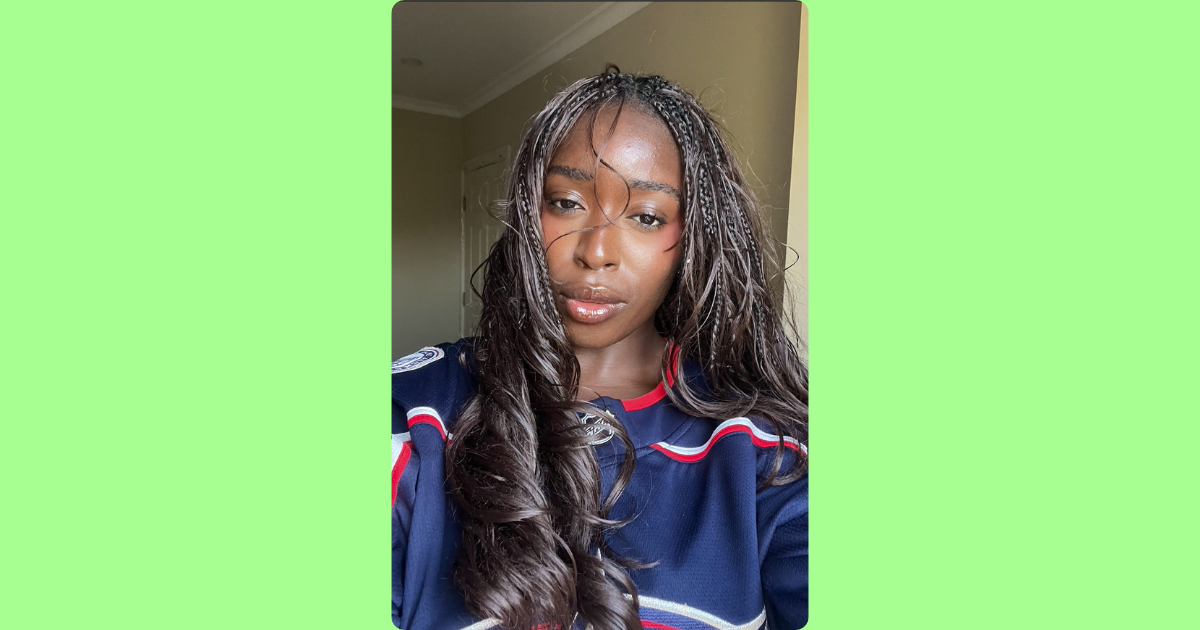
A Black young woman with brown curly chest-length braids is wearing a blue jersey with white and red strips and white logos. She poses in a selfie.

A Black young woman with brown curly chest-length braids is wearing a blue jersey with white and red strips and white logos. She poses in a selfie.

My name is Janice Aribisala (She/Her)

I'm an art director specialising in brand world-building, creating visual identities that feel lived-in and true to the people behind them. My work is culture-led, inspired by community, heritage and the places we call home.

Remember to do this:

  • Be open about how you’re feeling

    Don't be afraid to talk to the people you trust, because you don’t have to carry everything on your own.

  • Take time out for yourself

    Whether that’s resting, doing something you enjoy, or simply switching off for a while, because looking after you is never selfish and you deserve that care.

I want to show that mental wellbeing isn’t something to put off until things get hard, it’s something we can actively look after every day.
Janice

Ayan: To all the Black girls

A spoken word poem told by Ayan Mahamud exploring Black hair and its connection to identity, self-love and belonging 

Ayan, a Black young woman wearing a white shirt, styles her curly afro-textured hair in a bathroom mirror as a spoken-word poem plays in voiceover.

She follows a hair tutorial, adjusts her appearance and packs her brush into a black handbag. After briefly leaving, she returns, removes her hairband and examines her reflection, pulling out a few strands. She notices a baby photo of herself, picks it up and rests it beside the sink.

Looking in the mirror again, she runs her fingers through her hair, playfully shakes her head and smiles. She hugs the photo to her chest, places it in her handbag and leaves, smiling at her reflection.

2-minute watch

This film was made as a call to liberation for Black women as a collective.

  • It's inspired by my own experience, and the countless Black women who've shaped who I am today. The everyday lived-experience of shrinking and taming Black hair. It speaks to the ritual of conforming to the idea of what is acceptable, what is palatable, what is expected from Black women.

    This film poses an existential question: how long can we carry on like this before we lose ourselves?  This video holds a space for you to feel seen, to be invited to take a seat at the table.

My name is Ayan Mahamud (She/Her)

I am a multidisciplinary artist and the founder of AGEM (Accessible, Giving, Empathetic and Mindful), a Birmingham-based arts initiative nurturing wellbeing through creative workshops, poetry nights and exhibitions.

As a young Black girl, I immigrated to the UK, full of excitement and curiosity, which came crashing down with the realisation of the emphasis on the importance of my outward appearance.  I quickly realised just how "different" I was, and what this meant within the hierarchy of my school and community. I know that the work YoungMinds do would have changed the trajectory of my life as a young Black girl navigating systemic racism in childhood. I am immensely grateful for this opportunity for this very reason!  

Your voice matters! As a young Black woman myself, I know first-hand what it feels like to micromanage your facial expression, body language, tone of voice, and so on, honestly the list goes on forever! You deserve to live a meaningful life where you can show up as your whole self, not a fragmented version of yourself where you are shrinking any part of your cultured identity. This is because you are immeasurably valuable! My advice to young black women is to take up space, SHOUT OUT LOUD, you deserve the freedom to express yourself! Stay true to your authentic self!  

You deserve to live a meaningful life where you can show up as your whole self, not a fragmented version of yourself where you are shrinking any part of your cultured identity.
Ayan
A young Black woman, young Black man and young white man, all sitting on a bench outside, looking at something on a phone and laughing.

Share your story

There are still so many voices left out of the conversation around mental health. We’ve got new projects coming soon to change that.

Want to share your story? Subscribe to our newsletter to be the first to hear about opportunities to get involved.

Subscribe now
opens in new window